
Our Approach
Montessori & Our Principles
A personalized method of education that adapts to each child’s learning style, stage of development, and interests.
What is Montessori Education?
Montessori is a method of education that is personalized to each child’s learning style, stage of development, and interests. Children develop complete academic and well-being foundations through hands-on experience, real-world application, and problem-solving using the Montessori Method of education.
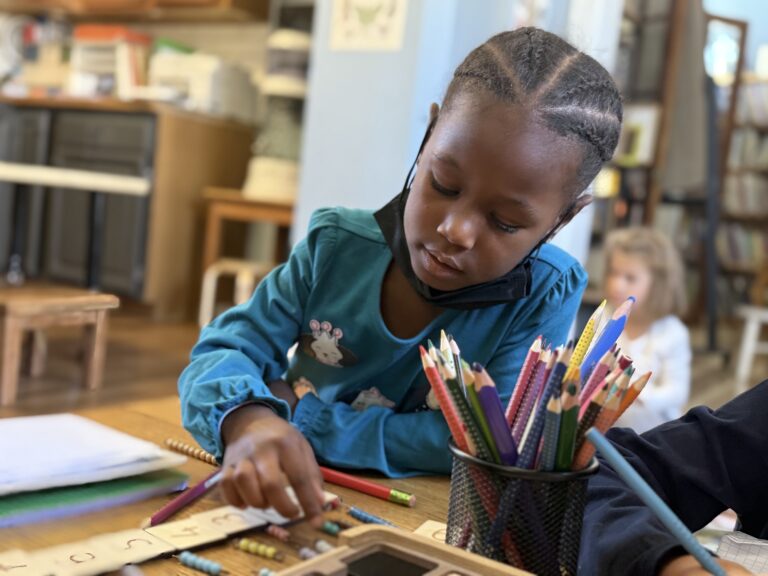
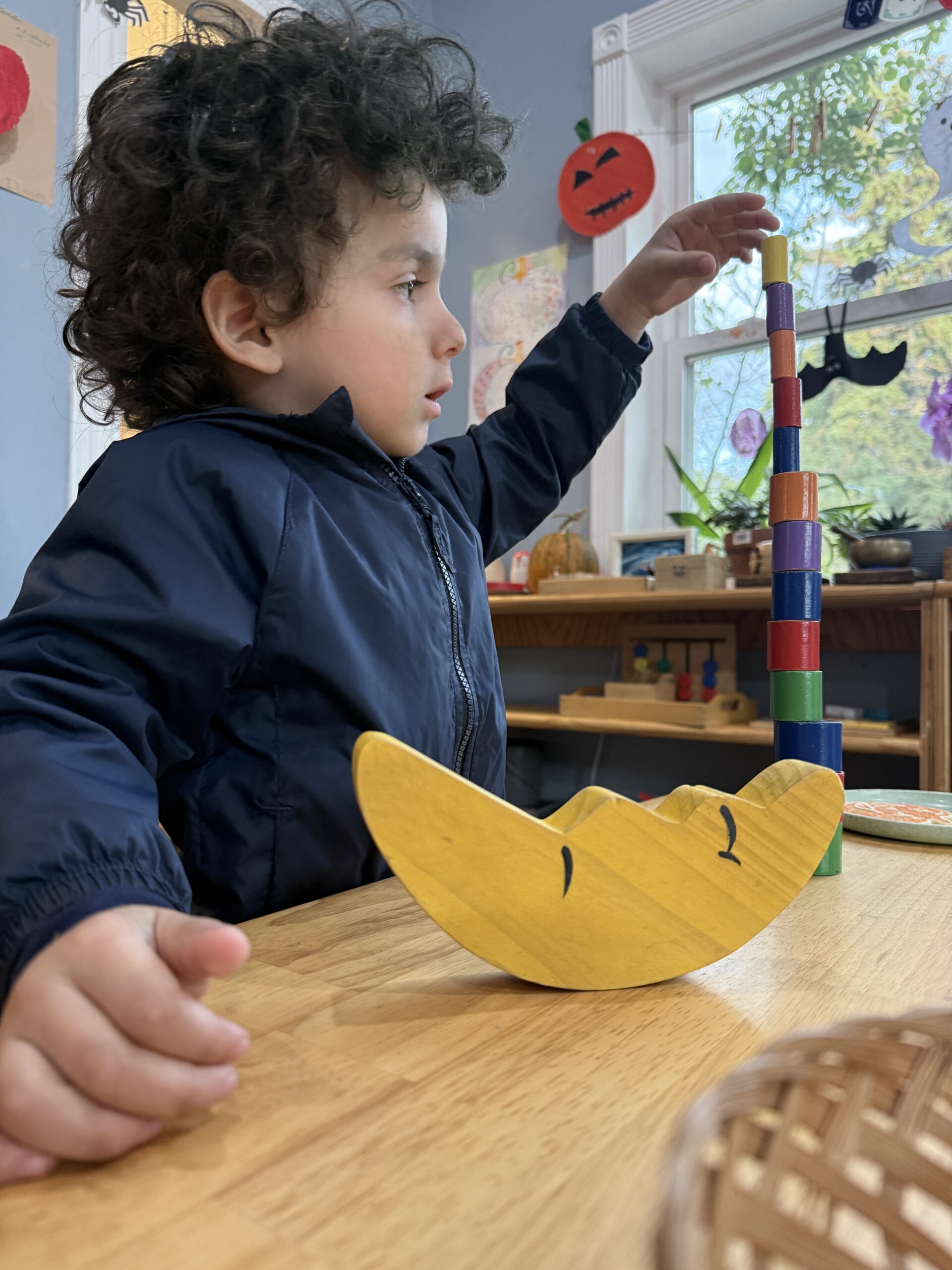
The Montessori Method of Education
Montessori is a method of education developed by Doctor Maria Montessori. It’s now practiced worldwide and has proven successful for over 100 years. Montessori offers a broad view of education — as both an aid and a preparation for life.
Maria Montessori began her career as a doctor. But through her work with underprivileged children, she transitioned into education. Using her background in science and observation, she developed a new approach to teaching based on how children naturally learn. You can learn more about her groundbreaking work on the American Montessori Society (AMS) website.
In 1907, she opened her first Casa Dei Bambini or “Children’s House.” Within a year, her students were reading, writing, and doing math — well ahead of their age level. Her method quickly gained attention across Europe and beyond.
The Montessori Classroom & Curriculum
What makes Montessori unique is the prepared environment — a space filled with hands-on materials designed for each stage of a child’s development. Unlike traditional childcare settings, Montessori classrooms encourage exploration, focus, and independence.
Each material supports a specific learning outcome, allowing children to build knowledge through repetition and self-directed practice. The five core areas of the Montessori curriculum include:
In this environment, educators act as guides. They observe what interests each child and introduce materials that match those interests — making learning both purposeful and joyful.
Montessori works because it adapts to each child's pace and style of learning. It promotes respect, independence, and a love of discovery — resulting in confident, motivated learners who thrive in and beyond the classroom.
The 7 Tenets of Our Montessori Experience
At The Bilingual Montessori Lab Academy, these principles guide every classroom, every interaction, and every child’s journey.
Holistic Development vs. Core Competence
Montessori: Montessori education values the emotional, social, physical, and cognitive needs which are essential for the development of the whole child.
Traditional: Traditional systems of education value teaching children mastery of skills and test performance.
"Children learn naturally through activity and their characters develop through freedom."
Dr. Maria Montessori
Self Discipline vs. Teacher Directed Discipline
Montessori: In Montessori, the learning structure and prepared environment of the classroom promote motivation and self-discipline through freedom coupled with responsibility.
Traditional: In traditional education, the teacher disciplines and encourages motivation using a system of external rewards and punishments.
Cooperation vs Competition
Montessori: Mixed-age classrooms and self-directed learning encourage cooperation and the development of social skills in a Montessori classroom.
Traditional: Individual learning graded by the teacher; collaboration and cooperation are secondary in a traditional classroom.
Concentration vs. Completion
Montessori: Long work periods in a Montessori classroom allow children to focus on deep learning.
Traditional: Tightly scheduled days in a traditional classroom value completion of teacher-directed work.
Active vs. Passive Learning
Montessori: The child moves freely around the Montessori classroom, choosing her own work — and the pace at which she does it — while being guided by the teacher.
Traditional: The child listens to and follows directions from the teacher who sets the pace of instruction in a traditional classroom.
Self Motivation vs. External Motivation
Montessori: Montessori education prioritizes self-motivation and individualized learning in a structured environment.
Traditional: Traditional education relies on external motivation and uniform schedules, often suppressing natural enthusiasm.
Spanish Immersion
Montessori: Using the hands-on, concrete experience-based Montessori tenets of education, the child is immersed in the second language. Experience becomes language and culture becomes newfound communication. Delivered at their own pace, guided with nurturing support.
Experience Montessori at BMLA
See how our principles come alive in a bilingual, child-centered classroom.