Language & Learning
Bilingualism & Immersion
Discover how Montessori and neuroscience come together to shape a love for language — and for life.
Language Immersion and Bilingual Education
Language immersion uses a second language — Spanish, in our case — as both the teaching language and the language of classroom content. Unlike traditional language classes, immersion programs integrate the language into all subjects such as math, science, and humanities.
Bilingual education starts when students receive instruction in two languages. This allows them to develop academic and communication skills at the same time.
✅ Read more about the benefits of language immersion from the Center for Applied Linguistics.
Neuroscience Supports Bilingual Education
Modern neuroscience provides exciting insight into how bilingualism benefits the developing brain.
These cognitive advantages align beautifully with the Montessori emphasis on independence, self-regulation, and purposeful learning, making our environment especially suited for nurturing bilingual thinkers.
Executive Function Boost
Children who learn in two languages show enhanced abilities in attention, working memory, and task-switching. These are essential executive functions that support lifelong learning.
Cognitive Flexibility
Bilingual learners often show greater adaptability when encountering new rules or solving problems---skills central to both academic and social life.
Metalinguistic Awareness
Bilingual students gain a deeper understanding of how language works. This supports strong reading and writing foundations across languages.
Why Bilingual Education Matters
We live in an interconnected world where the ability to communicate across cultures and languages is not just an asset — it’s a necessity. Bilingual education prepares our children to be:
Global Citizens
Who appreciate and respect diverse perspectives.
Confident Communicators
Who can connect in multiple languages.
Lifelong Learners
With the cognitive agility to adapt in a fast-changing world.
Languages such as Spanish and Chinese continue to grow in global relevance. Parents, educators, and communities increasingly recognize that bilingual education is not only about communication—it’s about opportunity.
A Montessori Approach to Language Learning
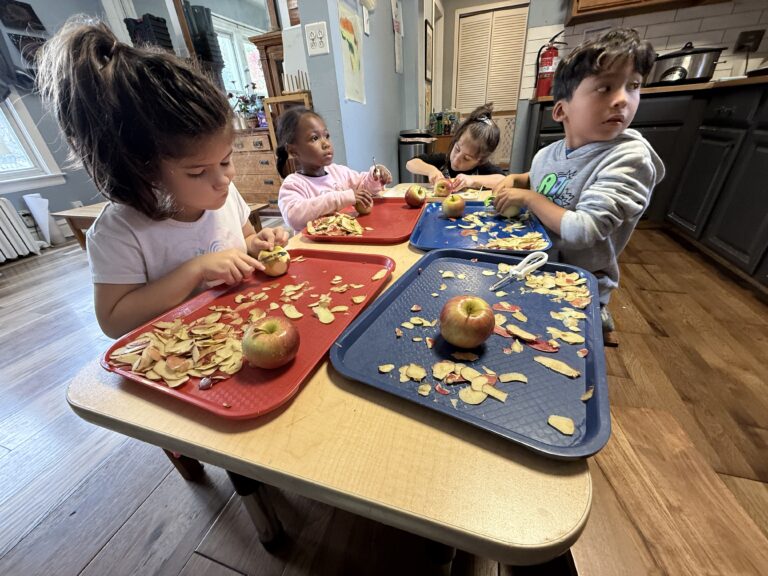
In a Montessori classroom, language is not taught in isolation. It is experienced, lived, and used in real contexts, making bilingualism a natural extension of the child’s environment. Materials, conversations, and routines in both languages offer:
- Consistent, immersive exposure
- Opportunities for meaningful language use
- Respect for each child’s individual pace of development
Through this approach, children develop deep, functional bilingualism, not just vocabulary memorization. They also build confidence and joy in using language as a tool for learning and connection.
Why Early Immersion Matters
Research and experience shows that starting language learning early leads to stronger fluency and cognitive development. At BMLA, we start Spanish immersion at age 3, combining it with Montessori practices and music-based learning. This combination helps children build language confidence and cultural understanding.
Growing Bright Minds, Two Languages at a Time
At Bilingual Montessori Lab Academy, children don’t just learn English and Spanish — they live both languages every day. Neuroscience shows that bilingual brains are stronger, more flexible, and more creative. Switching between two languages builds focus, memory, and problem-solving skills — the same executive functions children use to plan, think, and self-regulate.
In our Montessori classrooms, language grows naturally through songs, stories, conversations, and hands-on materials. Children explore words with joy, curiosity, and movement — the perfect match for the sensitive period of language development.
Bilingualism is more than communication — it's connection. It nurtures empathy, cultural awareness, and confidence to thrive in a diverse world.
How Bilingual Learning Transforms a Child's Brain and Heart
In an increasingly connected world, speaking more than one language is much more than an academic skill — it’s a doorway to new ways of thinking, feeling, and relating to others. At Bilingual Montessori Lab Academy, we believe that the bilingual brain doesn’t just grow cognitively — it expands emotionally and culturally as well.
The Magic of the Child's Brain
From birth, the human brain is prepared to learn any language in the world. The first years of life are a period of extraordinary brain plasticity — neural connections grow, strengthen, and reorganize according to the child’s experiences. That’s why, in Montessori education, the linguistic environment matters so deeply: every word, every conversation, every shared story helps build the foundations of thought and communication.
Bilingualism: A Workout for the Brain
Neuroscience has shown that bilingual children develop greater mental flexibility, sustained attention, and problem-solving abilities. Their brains learn to move between two linguistic systems — to “activate” one and “pause” the other — which strengthens their executive functions, the same skills we use to focus, plan, and make decisions. At Bilingual Montessori Lab Academy, children don’t “learn” English and Spanish as separate subjects; they live both languages as part of their natural environment.
Montessori and the Sensitive Period for Language
Maria Montessori observed that children go through a sensitive period for language from birth to about six years of age. During this stage, their minds absorb language with ease and enthusiasm. In our bilingual environment, we take advantage of this natural window by offering meaningful experiences in both languages: songs, stories, concrete materials, real conversations, and shared readings. This way, bilingualism develops without pressure, with joy, and in harmony with the rhythms of the child’s brain.
Language, Reading, and the Love of Learning
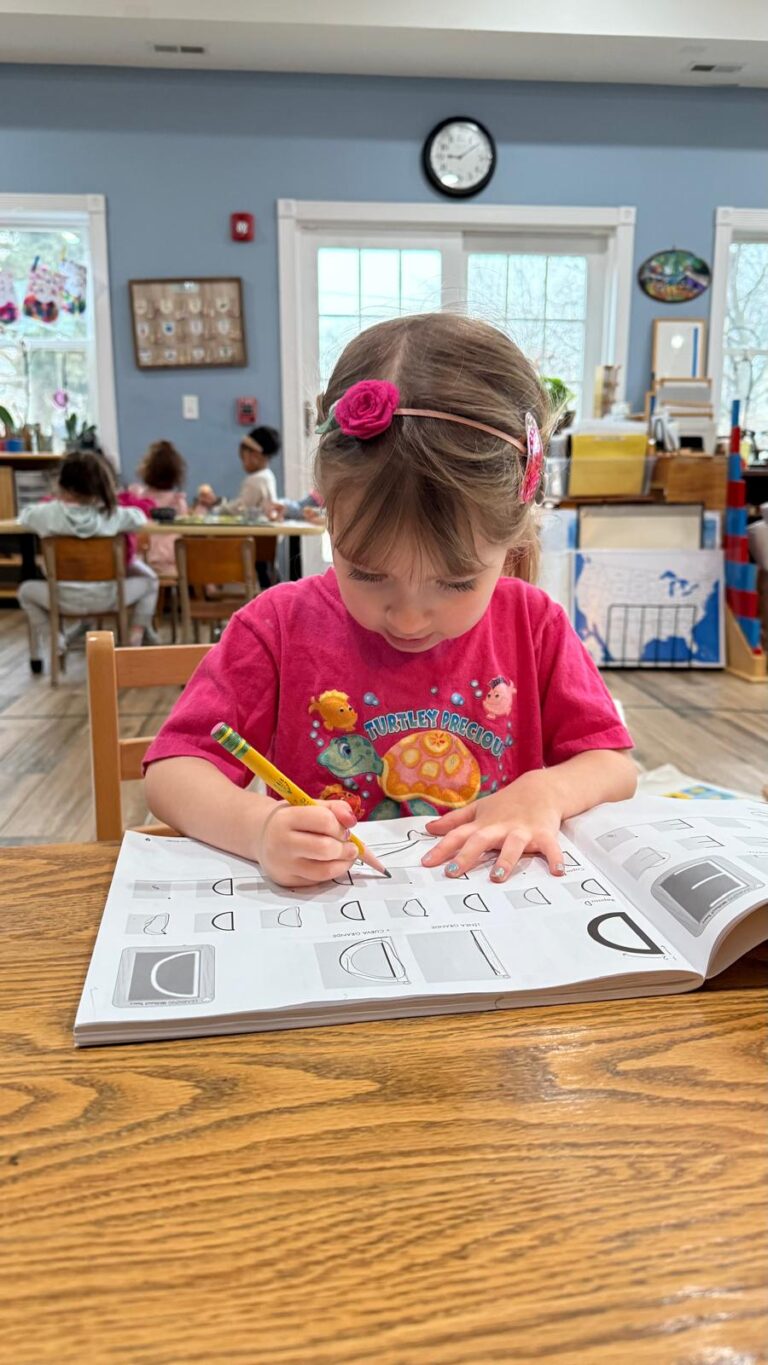
The path to reading begins long before recognizing letters. It starts with oral language, with the wonder of words, with the desire to communicate and make sense of the world. In Montessori education, children learn to read and write naturally — through movement, sound, and meaning.
When a child finds joy in language, their brain releases dopamine — the "happiness" neurotransmitter — creating a virtuous circle: the more they enjoy, the more they learn; and the more they learn, the more they want to keep discovering.
A Community that Embraces Diversity
Being part of a bilingual community means living with different cultures, accents, and perspectives. At Bilingual Montessori Lab Academy, we celebrate that diversity. Each language is a unique way of seeing the world, and by mastering both, children develop empathy, respect, and a truly global mind.
At Bilingual Montessori Lab Academy, we accompany every child on this wonderful journey of language — where science, heart, and education come together to nurture whole, free, and bilingual human beings.
Join Our Community of Bilingual Learners!
Discover how Montessori and Neuroscience come together to shape a love for language — and for life.